Solutions / Technology
Robot Learning.
Robots are no longer programmed for each motion. They are taught, with demonstrations, data and training. This is the technology behind humanoid robots, and it already creates value in the cell today.
Here is how we approach it: where the data comes from, how it becomes a working system, and which robots it ends up running on.
How it works
Robot learning in short.
Data sources feed one learning pipeline that serves every form factor. From the first demonstration to live operation.
Data sources
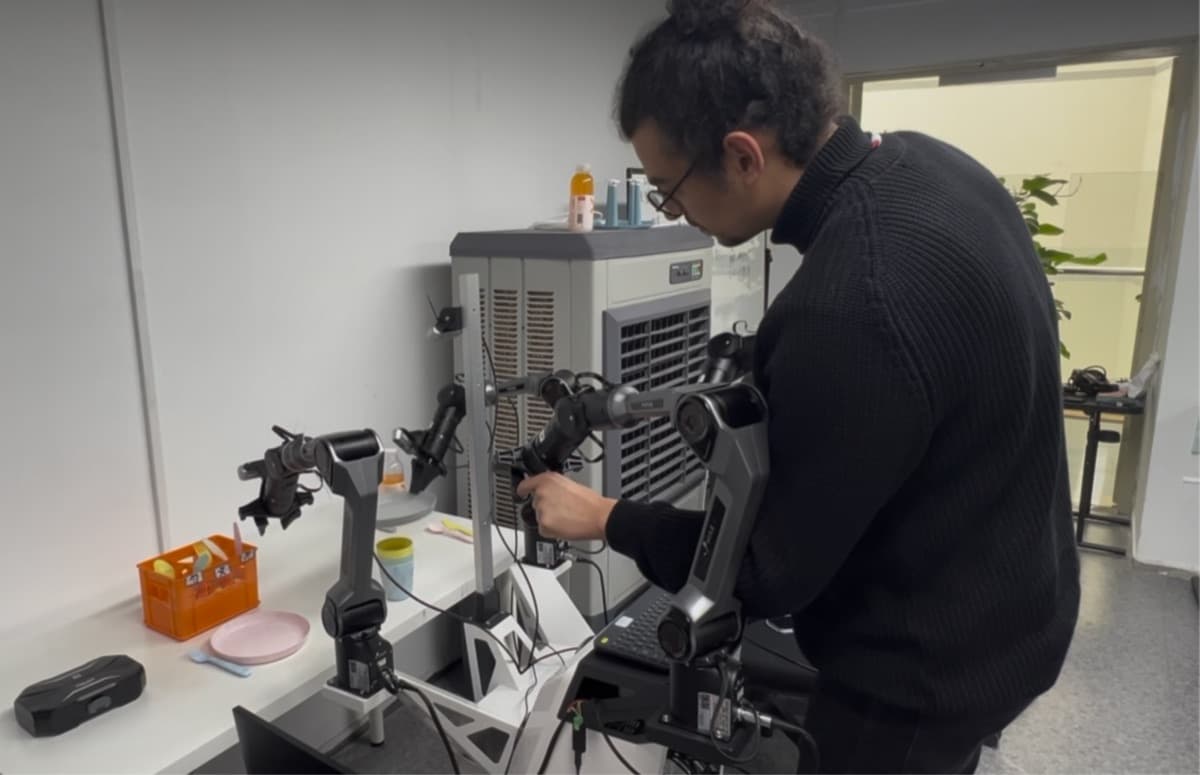
Teleoperation
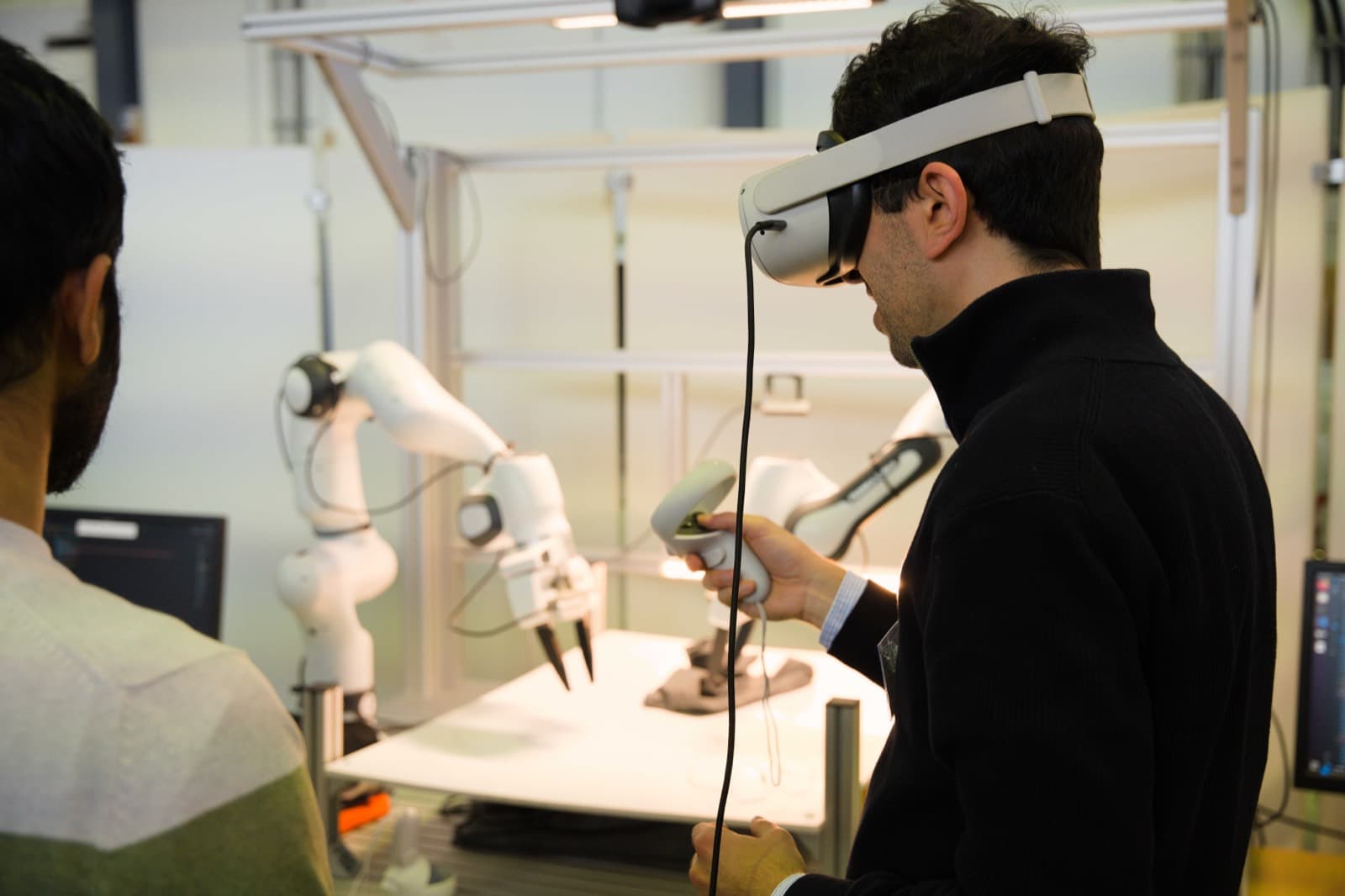
Proven todayPeople demonstrate the task through teleop rigs, typically 50 to 200 demos per task.
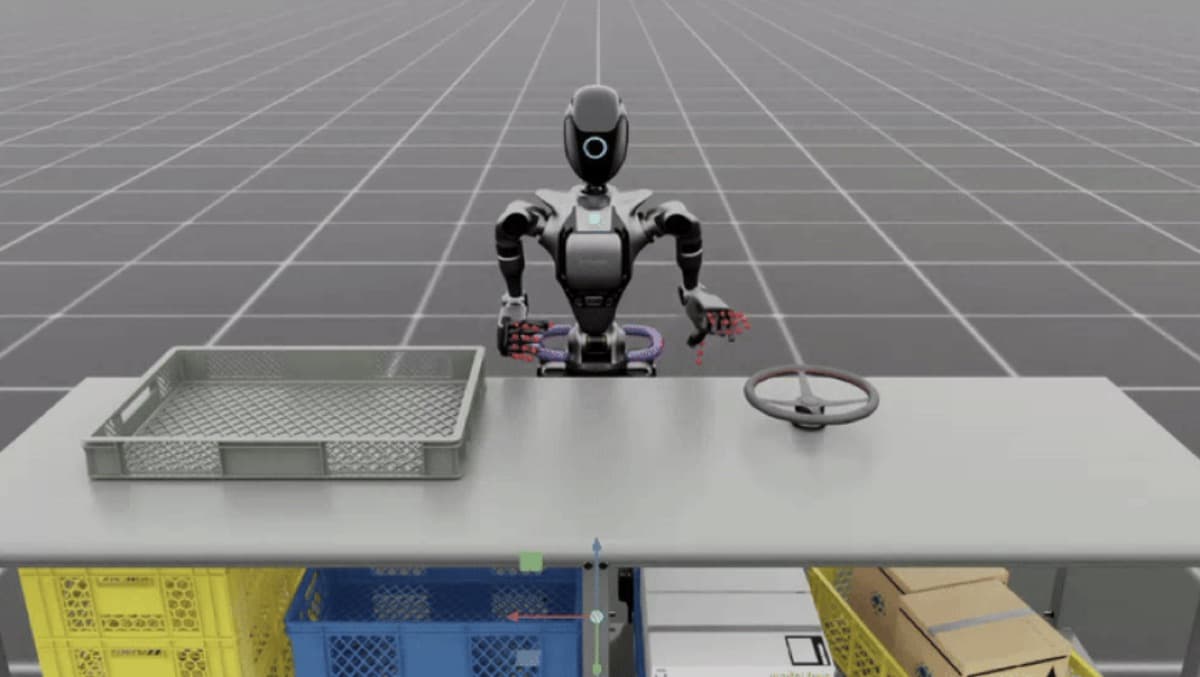
Simulation and world models
Scaling nowSynthetic data multiplies the demos, roughly by a factor of 20, plus pre-training in simulation.
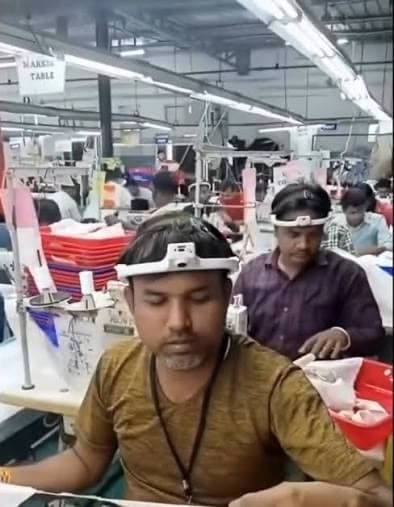
Learning from video
Still earlyRobots learn from videos of people doing the work. Promising, but early.
Robot learning pipeline
- 1
Collect
teleop demos on your parts
- 2
Curate & Augment
clean, label, scale in simulation
- 3
Train Policy
imitation learning (ACT, diffusion, VLA)
- 4
Validate in Sim
benchmarks before any hardware runs
- 5
Validate on Cell
staged tests against agreed KPIs
- 6
Deploy & Monitor
fleet data flows back into the pipeline
fleet data
Deployed on
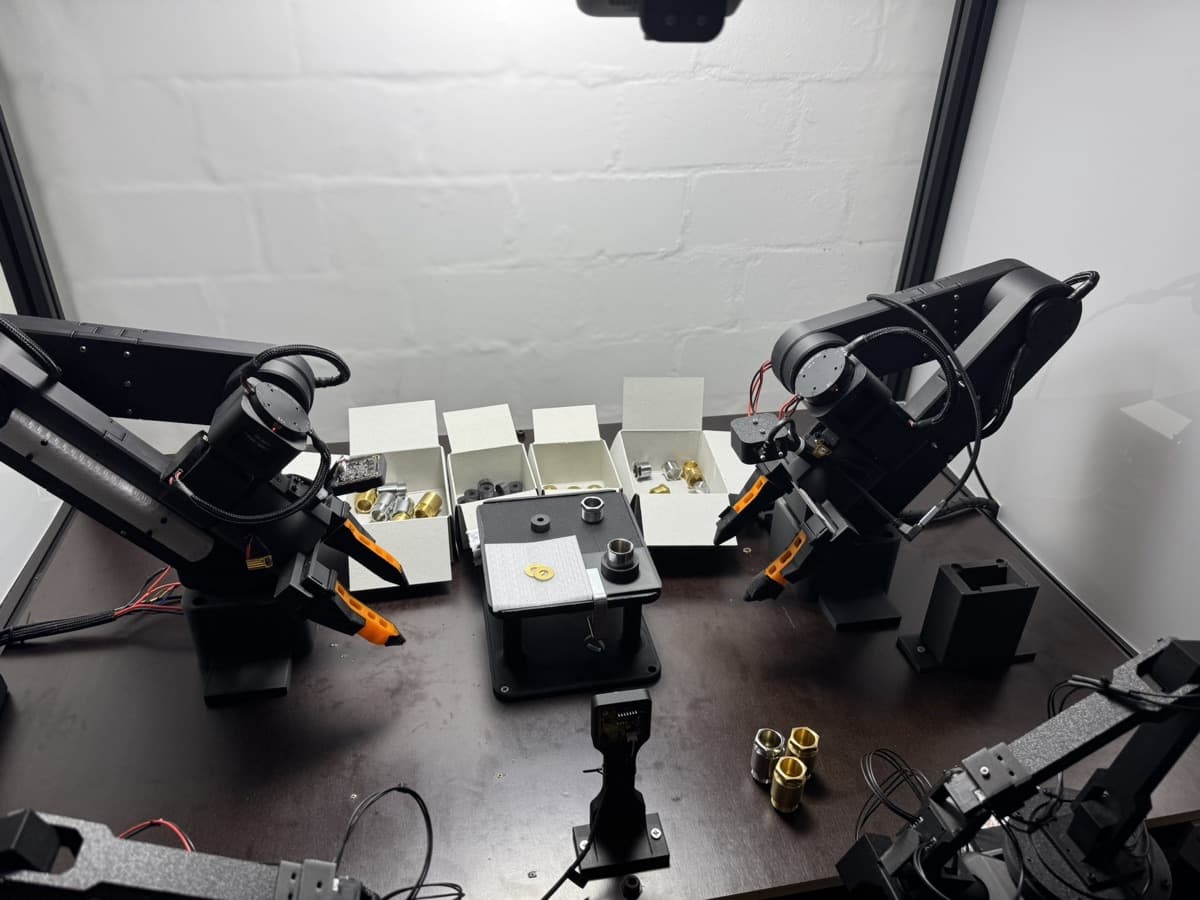
Bimanual fixed cell
Value todayTwo arms, fixed in place. Assembly and pick-and-insert already run productively today.
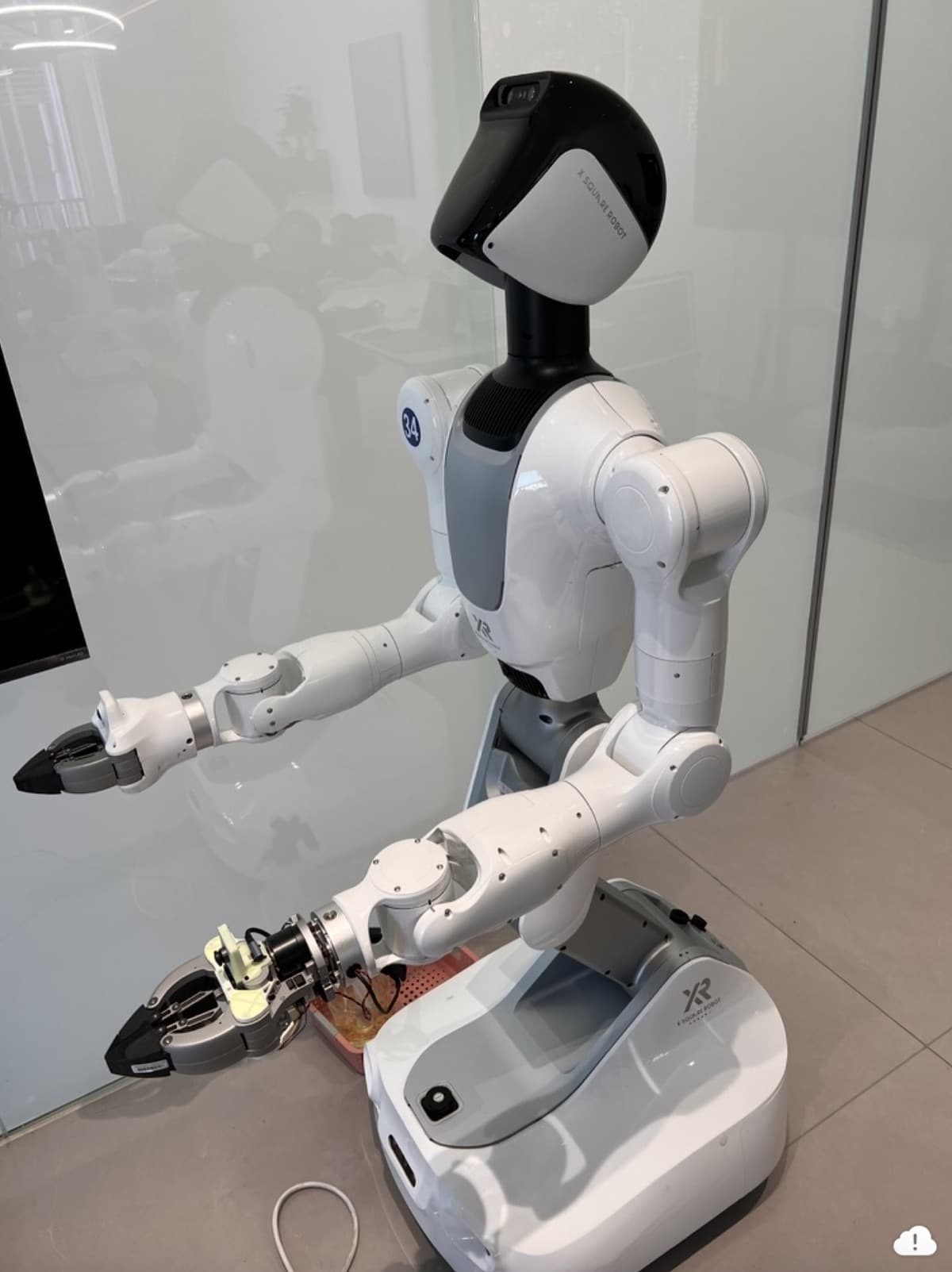
Mobile manipulator
AcceleratingFor machine tending and intralogistics. Certification is under way and maturity is rising fast.
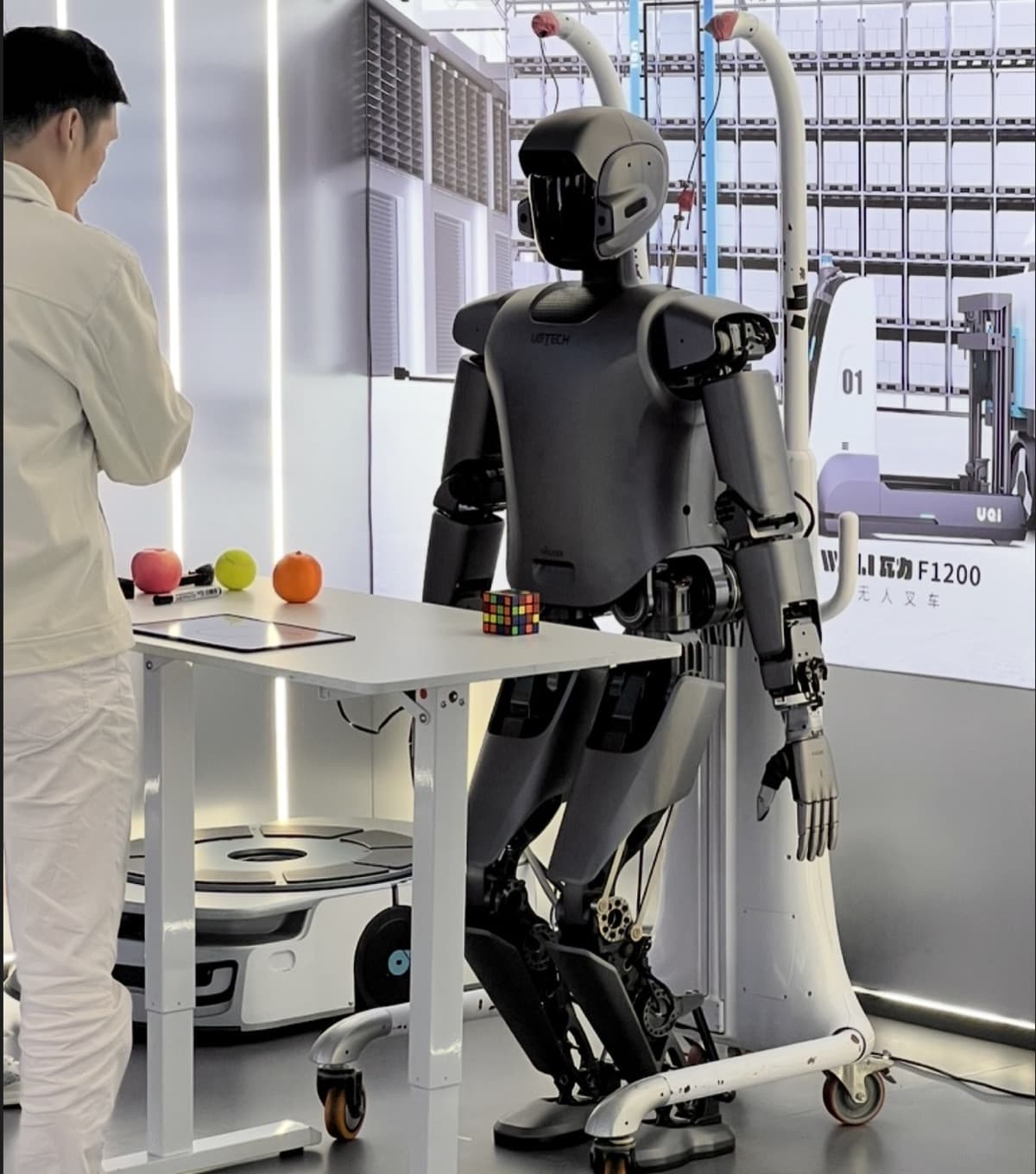
Humanoid
PilotingThe most mobile form factor, built for environments made for people.
One pipeline, every form factor: data collected today keeps its value. Teleoperation-based robot learning is proven in production for selected use cases, with hands-on experience in our team and network.
Hackathons and partners
We do not wait for finished answers.
Robot learning is a young field. Much of what will be standard in two years is only just emerging. So we experiment ourselves instead of just reading papers.
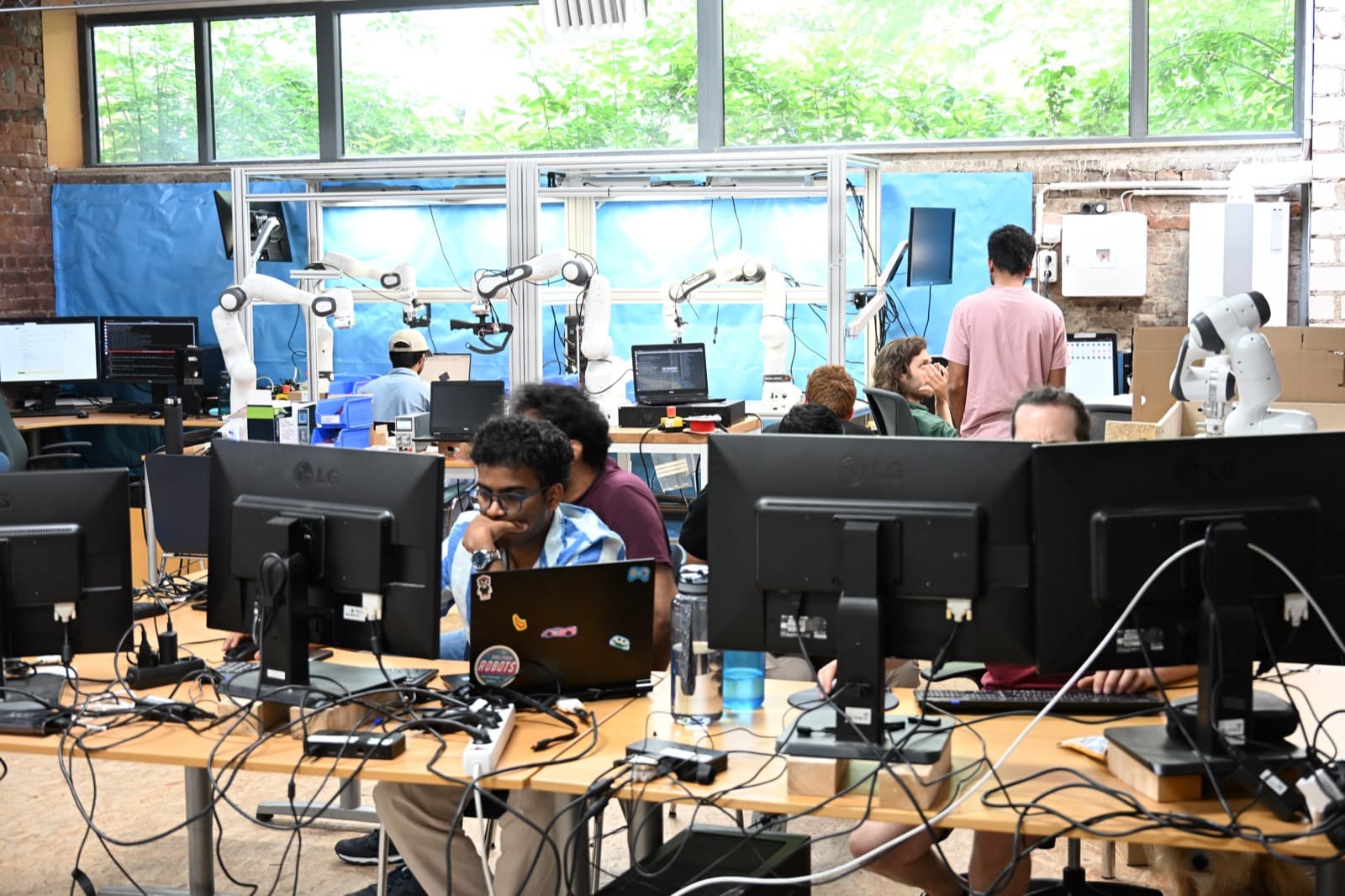
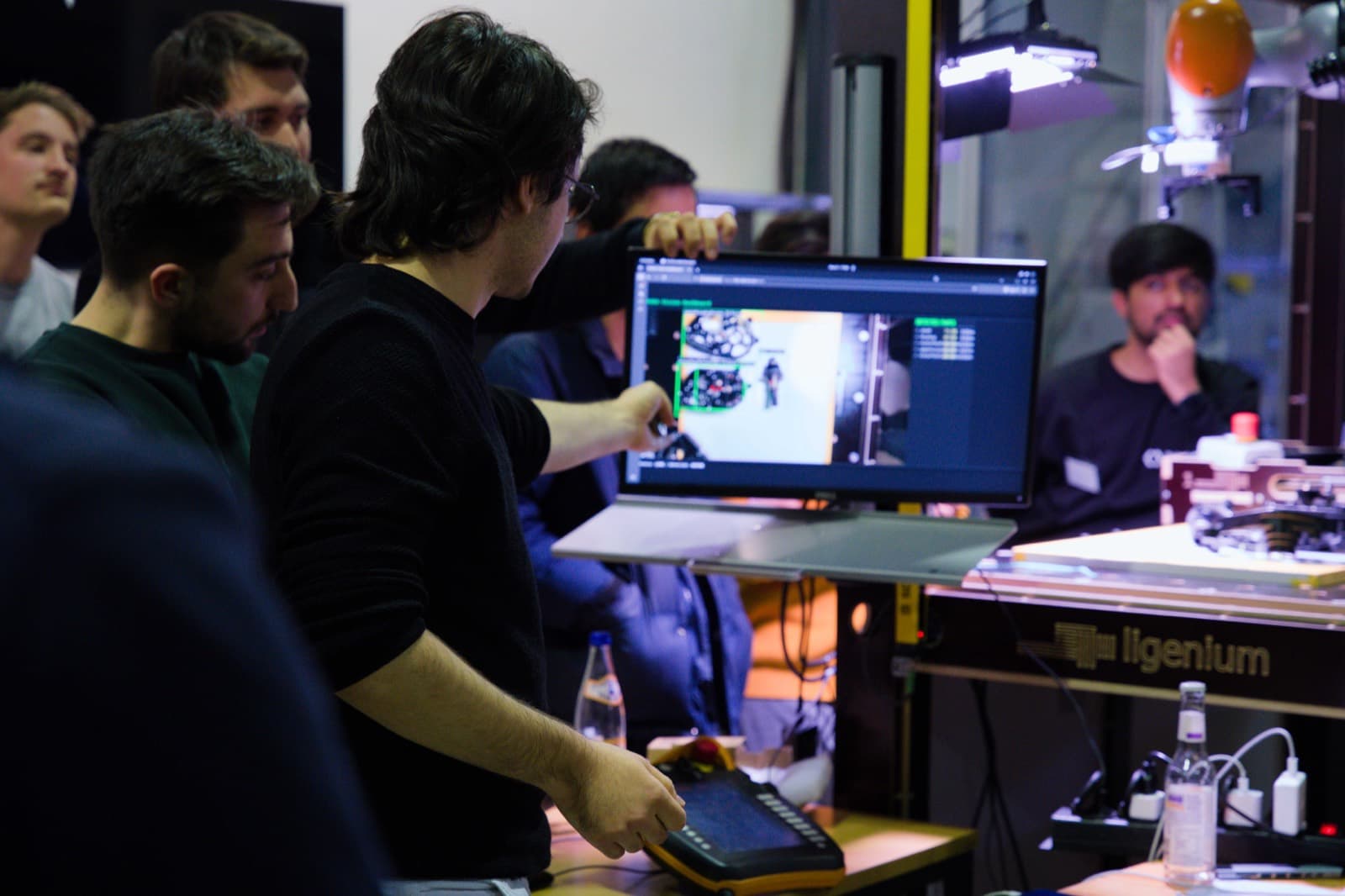
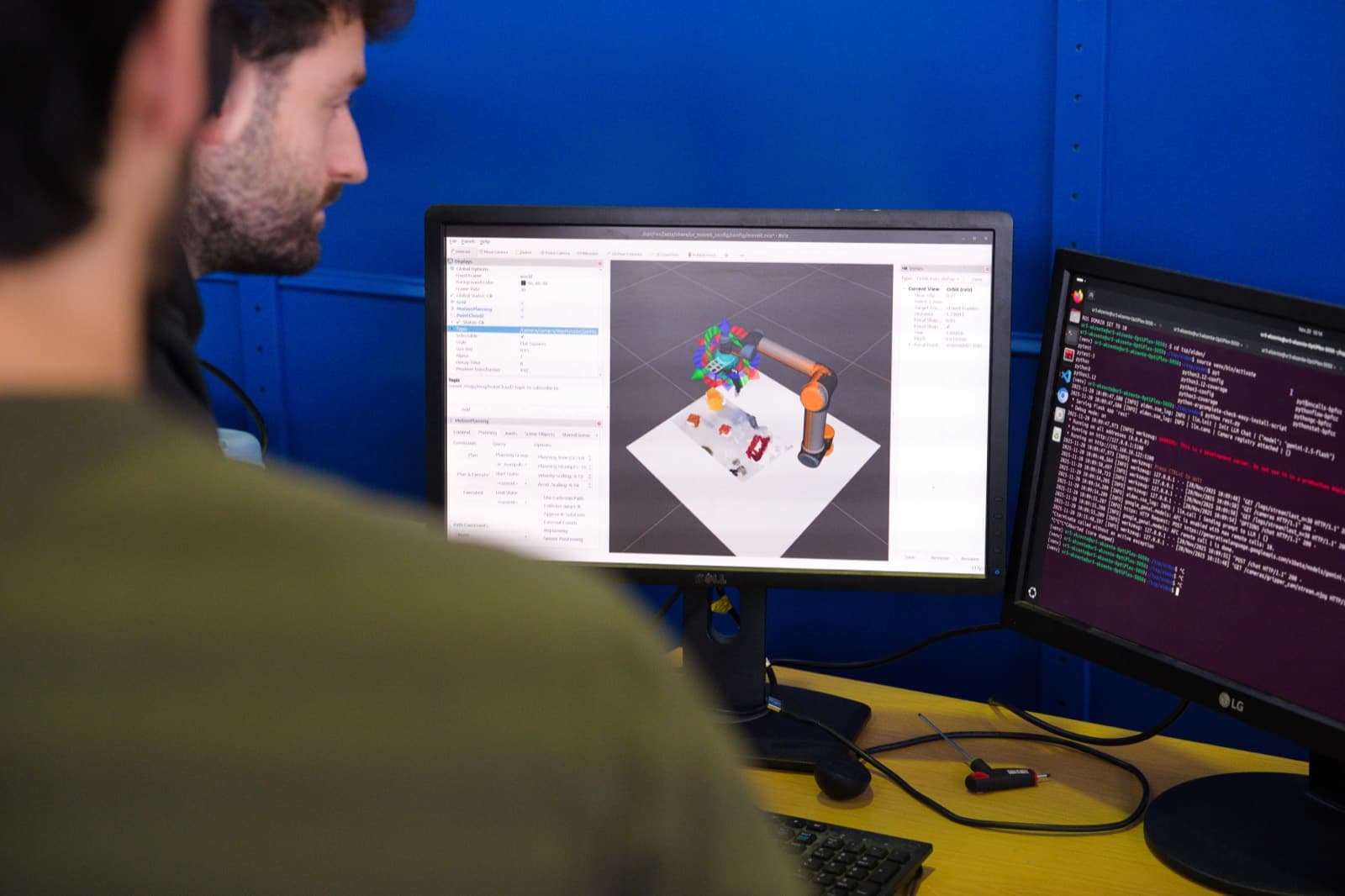
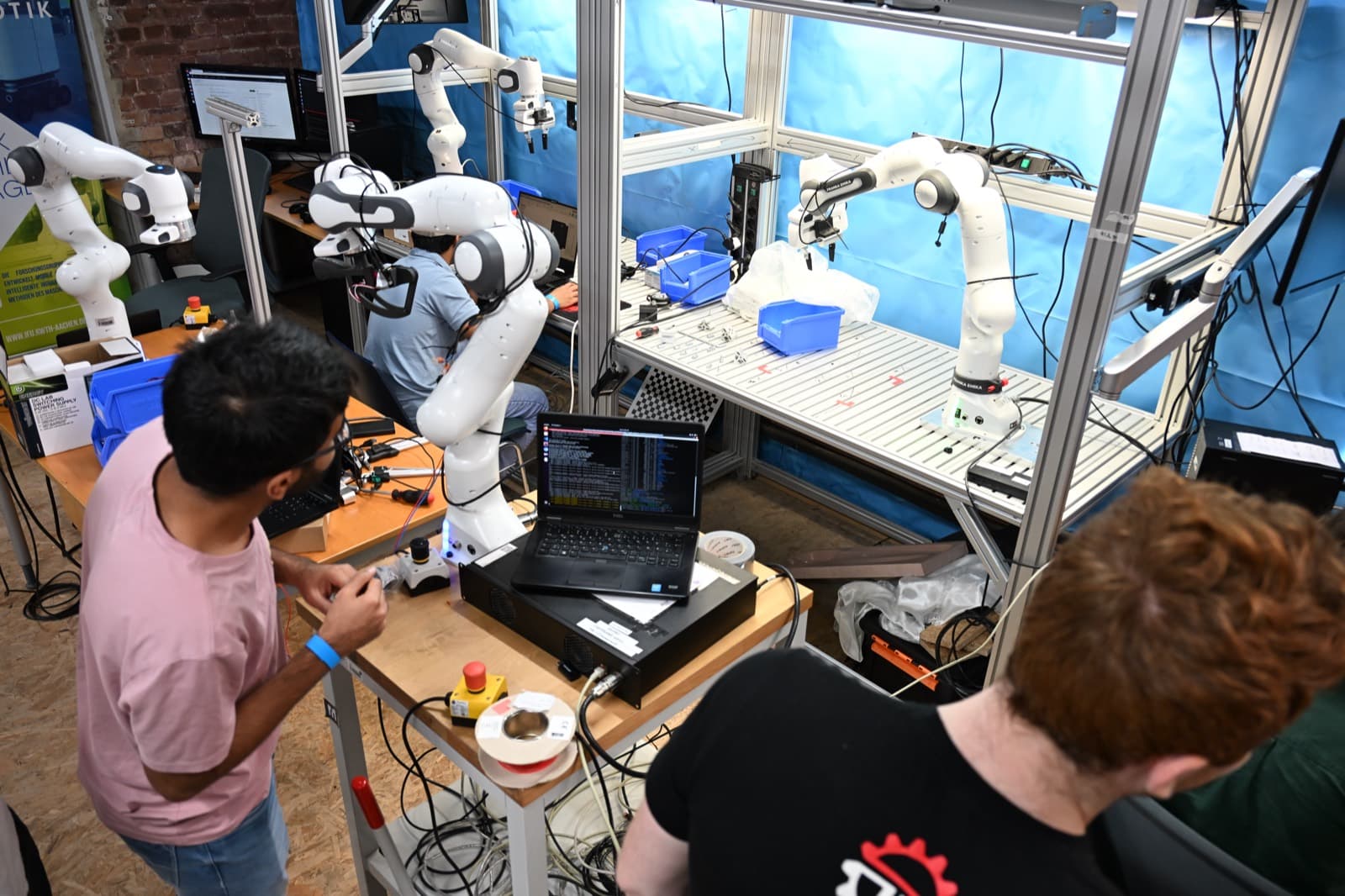
Our AI+Robotics hackathons bring the community around one table. Teams of engineers, researchers and students work on real questions: how do you collect data faster and cheaper? How do you get more out of it? Which solution architectures hold up, and what can be built directly on concrete use cases?
Alongside that, we work closely with researchers and startup partners, in Aachen and beyond. Insights from our network inform what we build for our clients.
Insights
From the lab, from hackathons, from projects.
A few clips from our work around robot learning.
Scroll horizontally to browse →
The first step
Where could robot learning help you?
Tell us about a task that could not be automated so far.
We will tell you honestly whether robot learning is ready for it, or whether a proven approach fits better.
30 minutes, free. No sales pitch.